MCA Platform Features Every Alternative Lender Needs
Discover the must-have MCA platform features for 2026, from ACH automation to syndication tools, and build a software stack that scales with you.
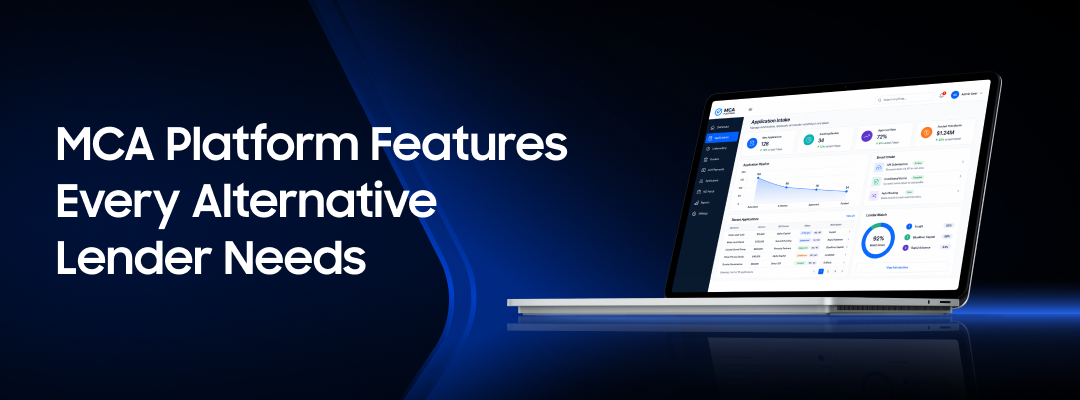
MCA Platform Features Every Alternative Lender Needs in Their Software Stack
You already know what merchant cash advance software is and roughly how it works. Now comes the harder question: what actually needs to be inside your platform for it to hold up once deal volume gets real?
A lot of funders learn this the hard way. Software that worked fine at 20 deals a month starts falling apart at 100. And by the time you feel it, growth's already outpacing your team's bandwidth to deal with a migration.
Some of what's on this list looks minor until you're the one without it at deal number 200. Let's break down what actually needs to be there.
Application Intake That Doesn't Create Bottlenecks
This sounds basic, but it's where a lot of platforms quietly fall short. Brokers and ISOs should be able to submit deals, track approval status, and manage commission splits from one dashboard, while intelligent lender matching and API-based submissions route each file to the funders most likely to approve it fast.
If your intake process still relies on brokers emailing PDFs and someone manually keying data into a system, you're bleeding time on every single deal before underwriting even starts. Look for conditional forms too, a retail shop and a multi-location restaurant shouldn't be filling out identical fields. The intake layer should also capture lead source, business entity type, ownership structure, and requested terms in one organized record that carries through the entire deal lifecycle, instead of getting re-entered at every stage.
Data Automation That Actually Understands MCA
Generic underwriting tools weren't built for how MCA decisions actually get made. A strong platform should plug into the right data sources so your underwriters get clean, structured information instead of digging through raw bank statements by hand. That means:
- Automated bank data pulls through providers like Plaid, no manual downloads or PDFs.
- Stacking and fraud signals surfaced through tools like DataMerch, flagging existing advance positions before your team even opens the file.
- Cash flow parsing through tools like MoneyThumb, reading average daily balance and deposit patterns in minutes instead of hours
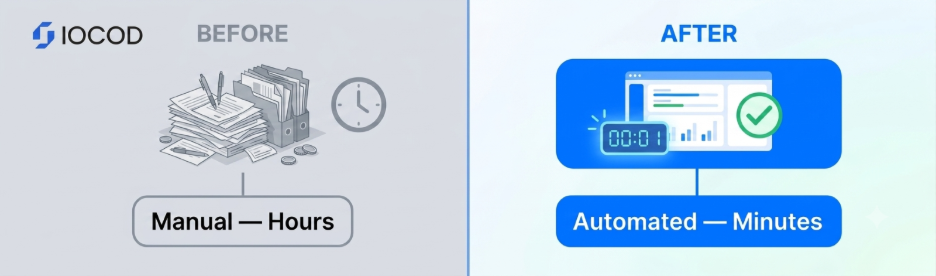
The decision still sits with your underwriter. What changes is how fast and how clean the data lands in front of them. Instead of manually reading three months of statements to spot a stacking risk, they're looking at flagged data points and making the call in a fraction of the time.
Native ACH, Not a Bolted-On Integration
This is the single biggest differentiator between MCA-native software and a generic platform wearing an MCA costume. Native ACH handles debits, credits, syndicator splits, and returns right inside the platform, so payment data and deal records never fall out of sync.
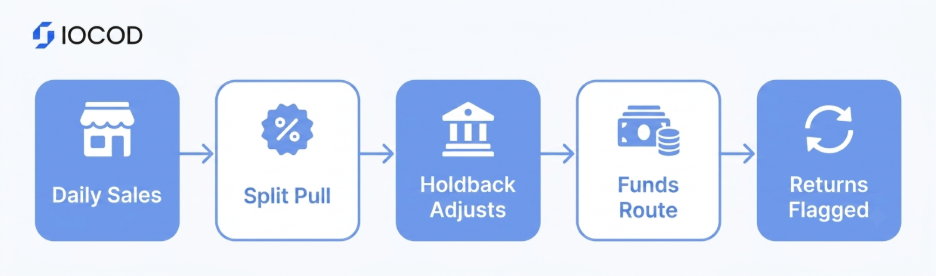
It should also pull payments on a set cadence, split-process a percentage of daily card sales, and adjust holdback as merchant volume moves. Skip this and your team's stuck reconciling payments by hand every day, which caps how much volume you can actually run.
Return handling matters too. Slow processing pushes collections back by days, and across a big portfolio, that adds up fast.
Syndication Tools That Handle Real Complexity
Syndication is where MCA platforms quietly fall apart. Multiple partners, different splits, fees per payout, every dollar has to land right, every cycle. Without dedicated tooling, it's a spreadsheet nightmare fast.
A gap IOCOD sees often: origination and underwriting get built out fine, syndication gets bolted on late and manual, until it becomes everyone's headache.
- Multi-participant allocation, calculated automatically, not reconciled after the fact.
- Position tracking at both gross deal and individual investor share level.
- Automated fee calculation, no manual payout math.
- A syndicator portal, so partners see their own numbers without calling your office.
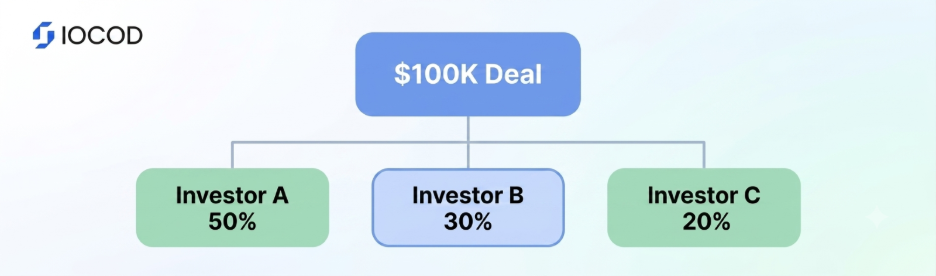
Get this right early and syndication scales quietly. Get it wrong, and it's the bottleneck that caps how many capital partners you can support.
White-Label ISO and Broker Portals
Your broker network drives a big chunk of deal flow, and the software they touch reflects on you. It's an area IOCOD watches closely, since broker experience shapes how much deal flow reaches you. White-label portals let each group, syndicators, ISOs, brokers, merchants, log in and see only what's relevant to them.
For brokers, that means submitting deals, checking status live, and seeing commissions clearly. A broker emailing to ask "what's the status" might send their next deal somewhere with better visibility. Branding it as your own, not generic third-party software, builds trust over time.
Renewal Tracking That Doesn't Rely on Memory
Renewals are one of the highest value activities in an MCA business, and one of the easiest to miss without the right system flagging it. Your platform should handle:
- Automatic repayment tracking on every active deal.
- Renewal window alerts timed right, not two weeks after the merchant already found funding elsewhere.
- Outreach triggers that fire the moment a deal becomes renewal eligible.
Get this right, and your sales team stays focused on closing, not on remembering which files to check.
Compliance Built Into the Workflow, Not Added After
Compliance in MCA keeps getting sharper, and state disclosure rules are only getting more specific. A strong compliance suite handles automated state disclosures and streamlined UCC filing, easy to overlook on a feature list, but tracking that manually across every state you fund in is exactly how gaps go unnoticed until an audit or legal dispute forces them into the open.
Portfolio Reporting That Gives You a Real Picture
You should be able to see where your portfolio stands, active positions, expected returns, at-risk deals, syndicator exposure, without pulling numbers from five different places.
Real-time analytics means decisions based on actual data, not gut feel, and it's non-negotiable when you're raising capital or bringing new syndicate partners who want clean numbers before committing.
Multi-Product Flexibility for Where You're Headed, Not Just Where You Are
Can the platform run MCA today and stretch into term loans, equipment finance, or SBA lending later, without a full replacement? It's a question IOCOD's tech team asks early in every build, because we've seen how often it gets skipped until it's too late.
A lot of funders eventually diversify into adjacent products, and platforms built rigidly around MCA alone often can't stretch to support that without a rebuild that costs time and money nobody planned for. It's a pattern worth designing around from day one, even if you're MCA-only right now.
Why Off-the-Shelf Platforms Eventually Hit a Ceiling
Most established platforms cover the basics fine. But they tend to box you in: narrow MCA focus that doesn't stretch when you expand into equipment finance or revenue-based financing, and broker portals that only take deals in, not out to multiple funders.
Some split functionality entirely, strong on syndication, weak on origination, forcing your team to run two systems and manage the reconciliation risk that comes with it.
Hitting the ceiling on your current setup? If your platform is capping your growth instead of supporting it, a custom build might be worth exploring. Here's exactly what that involves: The Complete Guide to Building a Lending Software Platform
FAQ
- What's the most commonly missing feature in MCA software?
Native ACH. Most platforms bolt it on through a third party instead of building it in, and that's where payment data and deal records fall out of sync. - Do I need syndication tools if I'm not syndicating deals yet?Not immediately, but check if your platform can add it later without a rebuild. Plenty of funders start direct-only and move into syndication as they scale.
- What's the difference between an ISO portal and a broker submission network?An ISO portal takes deals in. A broker submission network routes deals out to multiple funders through one API. That extra flexibility can affect how much deal flow brokers send your way.
- Should compliance features be a dealbreaker when evaluating MCA software?
Yes. State rules vary and change often. Skip automated tracking, and that job falls on your team by hand, which is exactly where things slip. - How do I know if I need a custom platform instead of an off-the-shelf one?
Working around the same limitations, waiting on someone else's roadmap, or running two systems for one deal lifecycle. If that sounds familiar, you already have your answer.
Trying to figure out whether your MCA stack needs an upgrade or a full custom build? IOCOD builds lending platforms designed around exactly how alternative lenders operate, not retrofitted from generic tools. Talk to our team and let's map out what your operation actually needs.